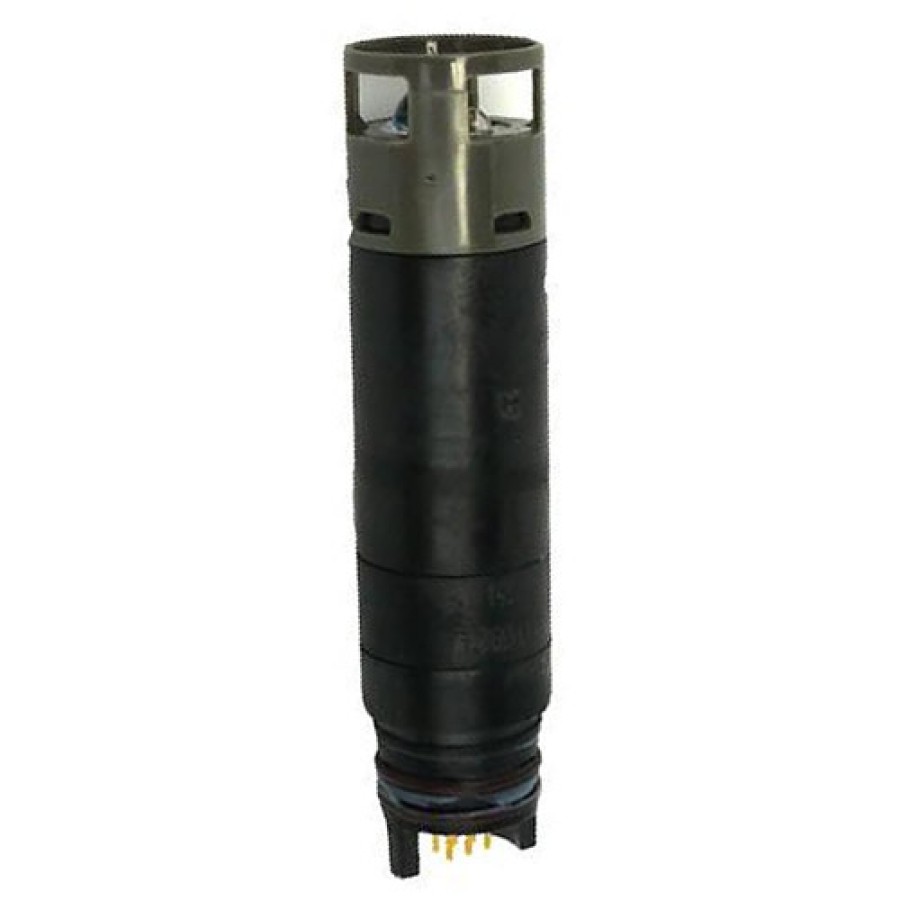
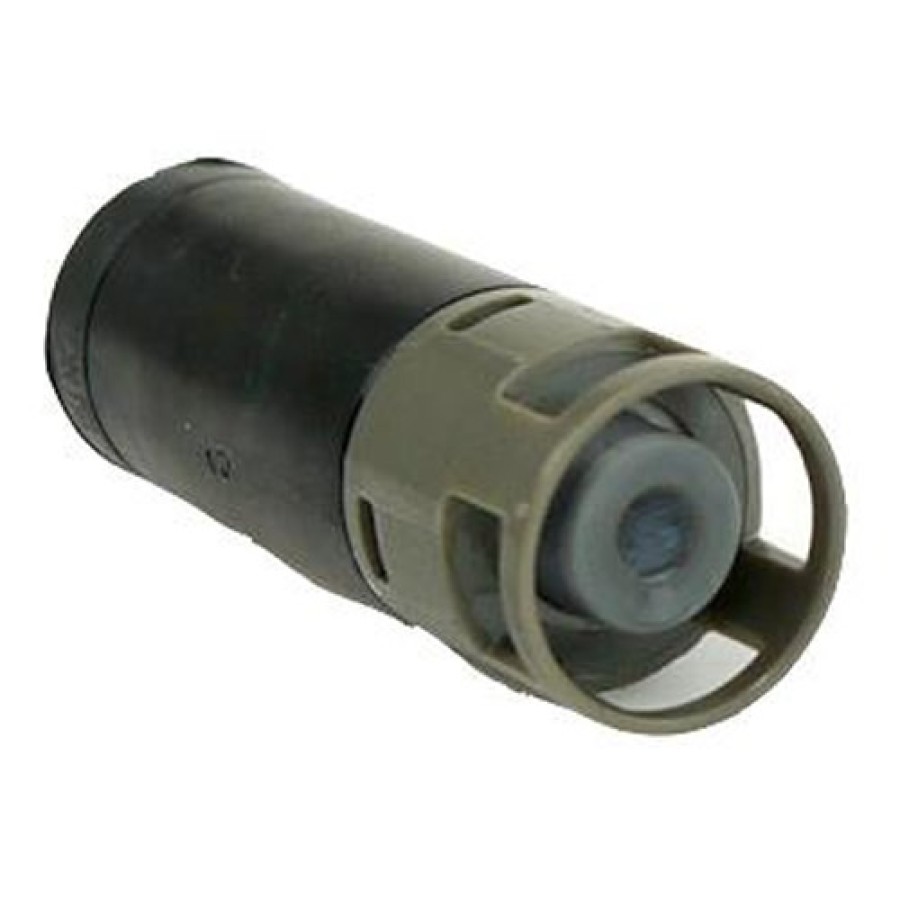
An ion-selective electrode (ISE), also known as a specific ion electrode (SIE), is a transducer (or sensor) that converts the activity of a specific ion dissolved in a solution into an electrical potential. The voltage is theoretically dependent on the logarithm of the ionic activity, according to the Nernst equation. Ion-selective electrodes are used in analytical chemistry and biochemical/biophysical research, where measurements of ionic concentration in an aqueous solution are required.
Glass membranes
Glass membranes are made from an ion-exchange type of glass (silicate or chalcogenide). This type of ISE has good selectivity, but only for several single-charged cations; mainly H+, Na+, and Ag+. Chalcogenide glass also has selectivity for double-charged metal ions, such as Pb2+, and Cd2+.
The glass membrane has excellent chemical durability and can work in
very aggressive media. A very common example of this type of electrode
is the pH glass electrode.
Crystalline membranes
Crystalline
membranes are made from mono- or polycrystallites of a single
substance. They have good selectivity, because only ions which can
introduce themselves into the crystal structure can interfere with the electrode
response. This is the major difference between this type of electrodes
and the glass membrane electrodes. The lack of internal solution reduces
the potential junctions. Selectivity of crystalline membranes can be
for both cation and anion of the membrane-forming substance. An example is the fluoride selective electrode based on LaF3 crystals.
Ion-exchange resin membranes
Ion-exchange resins are based on special organic polymer
membranes which contain a specific ion-exchange substance (resin). This
is the most widespread type of ion-specific electrode. Usage of
specific resins allows preparation of selective electrodes for tens of
different ions, both single-atom or multi-atom. They are also the most
widespread electrodes with anionic selectivity. However, such electrodes
have low chemical and physical durability as well as "survival time".
An example is the potassium selective electrode, based on valinomycin as an ion-exchange agent.
Enzyme electrodes
Enzyme electrodes definitely are not true ion-selective
electrodes but usually are considered within the ion-specific electrode
topic. Such an electrode has a "double reaction" mechanism - an enzyme
reacts with a specific substance, and the product of this reaction
(usually H+ or OH−) is detected by a true ion-selective electrode, such as a pH-selective
electrodes. All these reactions occur inside a special membrane which
covers the true ion-selective electrode, which is why enzyme electrodes
sometimes are considered as ion-selective. An example is glucose selective electrodes.
Alkali metal ISE
Electrodes specific for each alkali metal ion, Li+, Na+, K+, Rb+ and Cs+
have been developed.The principle on which these electrodes are based
is that the alkali metal ion is encapsulated in a molecular cavity whose
size is matched to the size of the ion. For example, an electrode based
on Valinomycin may be used for the determination of potassium ion concentration.